
.jpg)
.png)


Where Have all the Fairy Tales Gone: And 5 Reasons We Need to Bring them Back!

“Fairy tales are more than true: not because they tell us that dragons exist, but because they tell us that dragons can be beaten."
Neil Gaiman, Coraline
In my last blog post, I wrote about the demise of the nursery rhyme and the detriment such a loss has posed to generations both old and young. Not only were such silly puns and poems, without a doubt, a hallmark and foundation of literacy education, but they bound generations together, created much-needed structural bridges between the present and the past, and were the first "nuggets" of story structure that children were exposed to.
Fairy tales, unfortunately, have also lost favor with our modern culture. While Disney Studios has kept some of the more well-known fairy tales alive, they have oftentimes done so at the expense of the tale itself, putting modern spins on the timeless wonder and wisdom such tales can present to children.
And besides, the movies are never as good as the books.
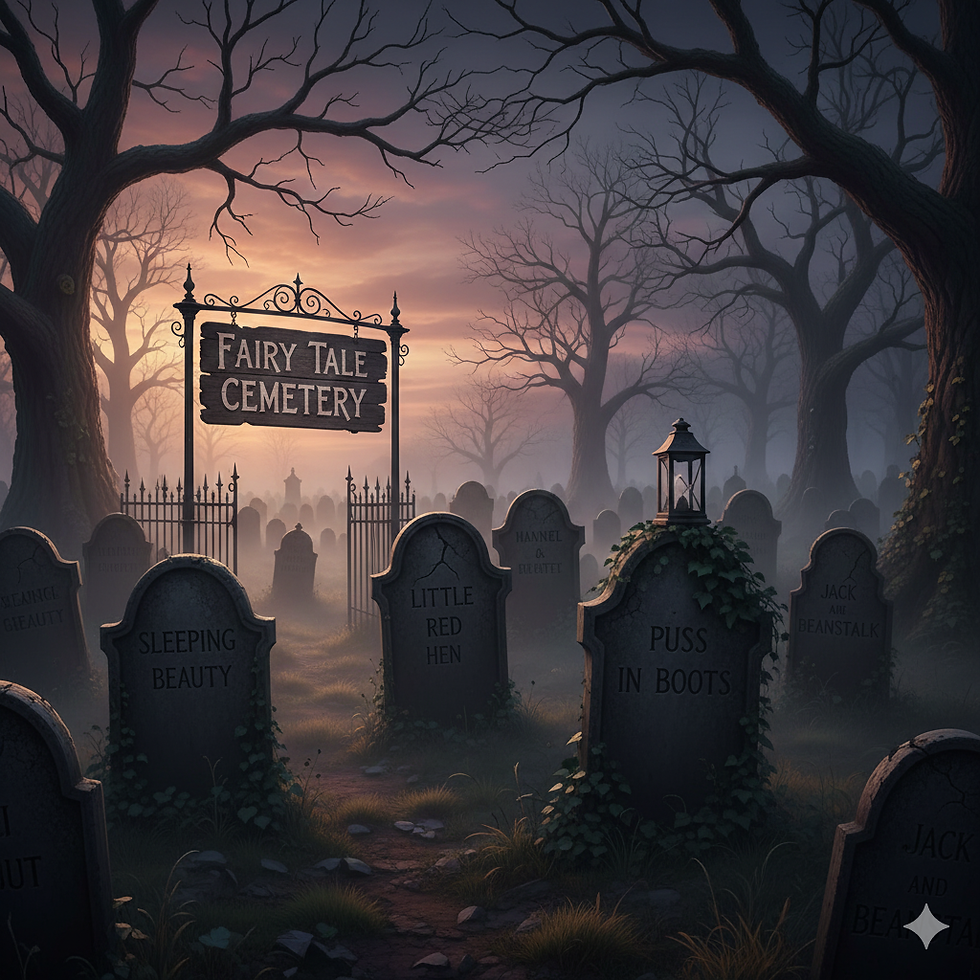
Fairy tales, within their origin, boast a rich and complex history. Far from being quaint bedtime stories for children, their birth lies deep within oral traditions, shared across cultures for centuries before ever being penned. Early versions were often dark, cautionary tales reflecting the harsh realities of their times, serving as moral compasses and communal memories. Figures like the Brothers Grimm and Hans Christian Andersen later popularized and refined these narratives, cementing their place in literary history.
Today, such stories are often dismissed as simplistic, outdated, or even harmful for their seemingly black-and-white morality and portrayals of gender roles. The rise of sophisticated children's literature and an ever-present "screen" of one sort or another, offering instant gratification, have further pushed these ancient stories to the periphery of modern childhood.
We relegate such tales to the dustbin of history to our own detriment, for deep within these stories are fundamental cornerstones that can help to shape a young child's mind in a number of ways.
Below are five reasons why fairy tales should be a major part of a young child's development:
Reason #1: Fairy tales provide moral and ethical frameworks.
As adults, we live in a world of grays, oftentimes having to choose between the lesser of two evils or having to take the good with the bad. But children should not be forced to understand the world in such terms yet, and fairy tales, in their purest form, offer clear explorations of timeless ideas such as good versus evil, courage versus cowardice, and kindness versus cruelty. Providing such essential building blocks is necessary for a growing understanding of what is right and what is wrong and provide the building blocks for the child to later move into a larger, adult world.
Reason #2: Fairy tales provide a foundation for emotional literacy.
The world can be a scary place to a child. Bad things can happen to even the best of people, and fairy tales allow children to safely explore such complex emotions like fear, loss, joy, and hope through relatable characters and imaginative scenarios. Think about how Jack in Jack and the Beanstalk confronts the giant or how Hansel and Gretl outsmart the witch in the woods.
"Someday you will be old enough to start reading fairy tales again." – C.S. Lewis, The Chronicles of Narnia, to his god daughter
Reason #3: Fairy tales provide opportunities to develop problem-solving skills.
We read to learn lessons, and fairy-tale characters, at least to a child, often face seemingly insurmountable obstacles. Through the story, children are encouraged to think about solutions and the consequences of actions. The Three Little Pigs contrasts the rewards of hard work and the dangers of laziness. Rumplestilskin highglights the fine art of negotiationg and compromise.
Reason #4: Fairy tales provide a foundation for storytelling and story structure.
Whereas nursery rhymes offer a micro-story that young minds can grasp, the fairy tale extends this framework for growing minds. The archetypal plots, character types, and narrative structures found in fairy tales are foundational to almost all subsequent forms of storytelling, from novels to films, to the basic structure of timeless novels and the use of the hero's journey within most great works of literature. Aladdin and the Magic Lamp (the tale,not the movie) explores the journey of a lazy boy tricked into a quest, or journey, and who eventually becomes a master of both the physical and magical world. Snow White and the Seven Dwarfs tells the story of exile and rebirth of a young woman, Snow White. She is thrust out of her ordinary world, lives with the dwarfs for a time as she battles her way to finding her true self, and utlimately returns home not as a child but as a Queen ready to rule her kingdom.
Reason #5: Fairy tales provide cultural connections and foster imagination.
Fairy tales not only link children to a shared human heritage, but foster a sense of wonder while at the same time expanding the boundaries of imagination beyond the everyday.
Diving into these magical narratives and spending time in these worlds isn't just about nostalgia; it's about nurturing comprehension, cultivating empathy, and preserving the very essence of imaginative storytelling for future generations.
Let's Bringing the fairy tales Back!
Start a timeless tradition today with your children, no matter their age, and start reading some fairy tales! Whatever you do - don't rely on the movies!
A quick list on the internet will yield well-known and lesser-known fairy tales. Don't stop with one, but dive into variations across cultures as well. Compare and contrast each as you read through them. And don't forget to dive into the deeper meanings and the lessons learned in each!
Not sure where to start? Be sure to sign up for my newsletter and get a FREE copy of my smallish book 5 Easy Peasy Ways to Bring Fairy Tales into Your Everday World! Just click HERE or on the picture below!


Donna entered education at the tender age of six, when she would come home from school, line her stuffed animals and dolls into rows, and teach them what she learned that day in first grade. She graduated from Texas A&M University with a B.S. in education and a specialty in reading. It was while teaching that she also developed a passion for the craft of writing, both personally and as an educator. She has since published over ten books, including five award-winning novels. She currently teaches middle school literature and composition at a local private school, and she is working on her sixth novel.
Donna lives in southeast Texas just outside of Houston even as longs for a log cabin in the woods. She rescues old furniture from the side of the road, stops at all garage sales, and never meets a thrift store she doesn't fall in love with!
And when she finds old libraries and even older books? Don't ask . . .


Comments